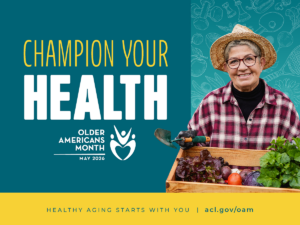
 May arrives each year with longer days, warmer air—and an important reminder that healthy aging is something we can all actively shape. That’s the message behind Older Americans Month, observed every May to recognize the contributions and vitality of adults age 60 and older.
In 2026, the national theme “Champion Your Health” encourages older adults to take charge of their well-being in ways that are realistic, empowering, and personal. It’s not about perfection or dramatic change. Instead, it’s about making informed choices, building supportive habits, and recognizing that small steps can lead to meaningful improvements in quality of life.
Health means different things to different people. For some, it may involve managing a chronic condition or staying on top of preventive care. For others, it could mean finding ways to stay physically active, maintain social connections, or support mental well-being. The key idea behind this year’s theme is that everyone has the ability to advocate for their own health—whatever that looks like in their daily life.
Physical activity remains one of the most powerful tools for healthy aging. It does not require a gym membership or intense workouts. Walking, stretching, tai chi, or chair exercises can improve balance, strength, and flexibility. Even modest movement, done regularly, can help reduce the risk of falls, support heart health, and boost energy levels.
Equally important is staying connected. Social engagement is closely linked to better health outcomes, including lower rates of depression and cognitive decline. Whether a weekly coffee with a friend, volunteering, or joining a local class or discussion group, these interactions play a vital role in overall well-being. Championing your health includes nurturing relationships that bring support and enjoyment.
Nutrition is another cornerstone. As our bodies change, so do our nutritional needs. Staying hydrated, eating balanced meals, and being mindful of how food affects energy and health conditions can make a noticeable difference. For many older adults, even small adjustments—like adding more fruits and vegetables or reducing sodium—can have lasting benefits.
Just as critical is advocating for yourself within the healthcare system. That may mean asking questions during medical appointments, understanding medications, or seeking second opinions when needed. Being an active participant in your care helps ensure that decisions reflect your preferences, values, and goals.
Mental and emotional health deserve equal attention. Life transitions—such as retirement, loss, or changes in mobility—can be challenging. Taking time to engage in activities that bring joy and purpose, whether that’s reading, gardening, learning something new, or helping others, supports resilience and a sense of fulfillment.
Communities also play an essential role in helping older adults champion their health. Local organizations, councils on aging and senior centers, and healthcare providers offer programs designed to support wellness, from fitness classes to educational workshops. Increasingly, communities are working to remove barriers by improving accessibility, transportation, and access to reliable information.
Older Americans Month is not only a celebration—it’s a call to action. It reminds us that supporting healthy aging is a shared responsibility, one that involves individuals, families, and communities working together.
For those age 60 and older, this month offers an opportunity to reflect on what health means to you—and to take a step, however small, in that direction. Schedule a check-up you’ve been putting off. Try a new activity. Reach out to someone who makes you feel connected. Or simply take a moment to appreciate the strength and experience you carry.
Championing your health is not about doing everything at once. It is about making choices, day by day, that help you live well, stay engaged, and continue to shape your own path. Healthy aging starts with you.